 PrimePulse Pest Control ServicePrimePulse Pest Control Service
We find it before we treat it
Pest Control Service Annapolis homeowners call at 11pm — after roaches show up behind the toaster or droppings turn up under the kitchen sink — starts here, and it starts with an inspection rather than a spray. We name the pest, show you where it is getting in, then treat only what needs treating. Searching for pest control near me in Annapolis usually turns up identical green-and-white pages; this one tells you the price range, the season, and the scope before anyone knocks on your door.
Call (667) 423-1880
Text or call about your pest control service job — a quick photo helps us quote fast.
A firm, all-in price confirmed before we start — no surprises.
On time, done to standard, and tidy when we leave.
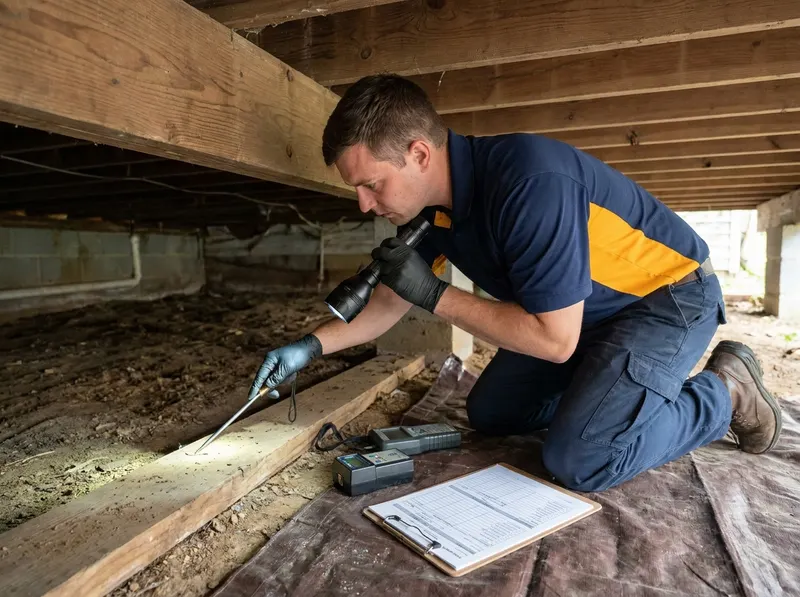
Termite inspection in Annapolis covers the crawlspace or basement perimeter, sill plates, floor joists, exterior grade, mulch beds and any wood-to-soil contact, looking for mud tubes, blistered paint, hollow-sounding trim and discarded wings. Anne Arundel County sits in a heavy mid-Atlantic termite pressure zone, and waterfront framing with high moisture is exactly what subterranean termites look for. You get a plain description of what was found and where, with photos, before anyone talks about treatment. Inspections run $250–$375, and February or early March is the quietest time to book one.
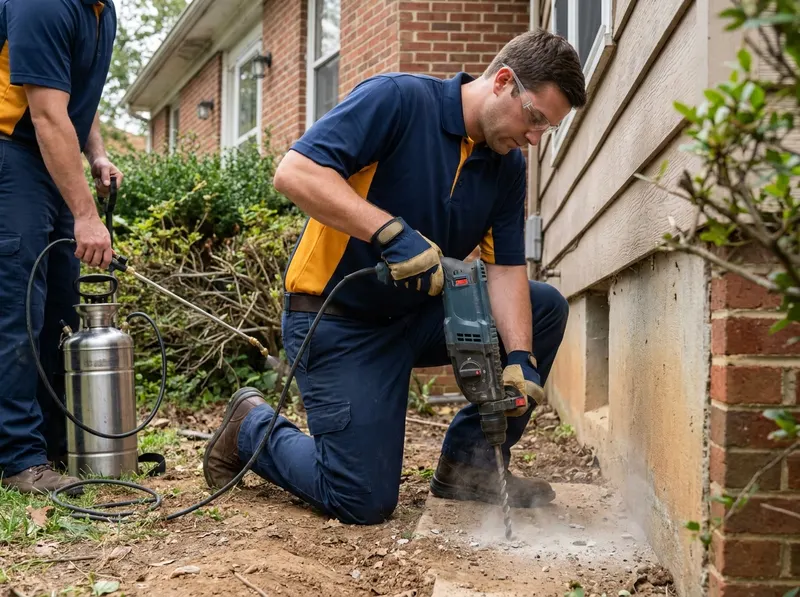
Termite treatment in Annapolis is a liquid soil barrier applied around the foundation, with drilling through slab sections, stoops or attached patios where the soil cannot be trenched. Pricing is driven by linear footage of foundation and access, which is why a compact Georgetown East rancher and a rambling Annapolis Roads house with additions are not the same job. Full-structure liquid treatment runs $1,200–$3,000; spot treatment of one active area is less but only protects that area. The company treats the whole perimeter when activity is found in framing, because termites travel through soil, not along the wall you happened to notice.
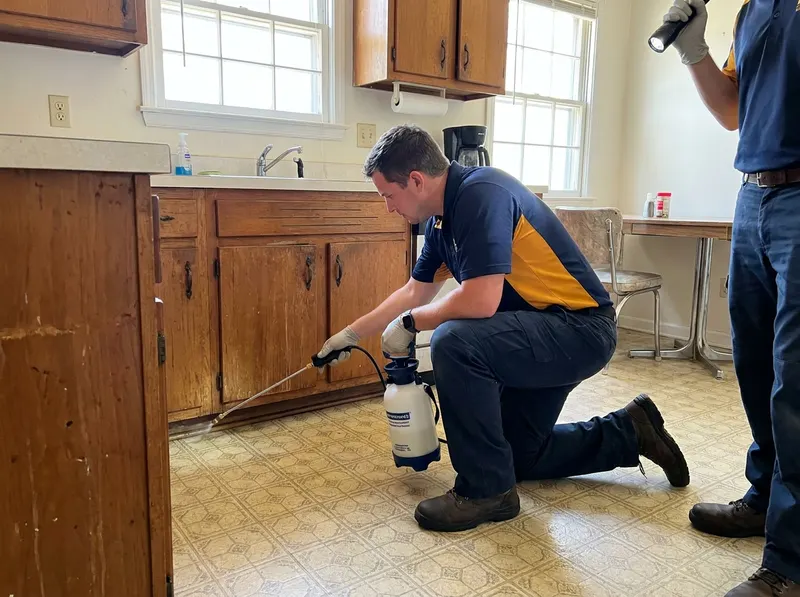
Cockroach treatment in Annapolis is built as a two-visit program at $350–$650 because German cockroach egg capsules survive the first application and hatch on their own schedule. The first visit is inspection and targeted gel and dust placement in hinge voids, motor housings, under-sink plumbing chases and behind the stove and refrigerator; the follow-up two to three weeks later confirms the population is collapsing. Kitchens in older rowhouse-style and multi-unit buildings share plumbing walls, so a neighboring unit is often the real source. We tell you when that is the case instead of returning to spray the same baseboard.
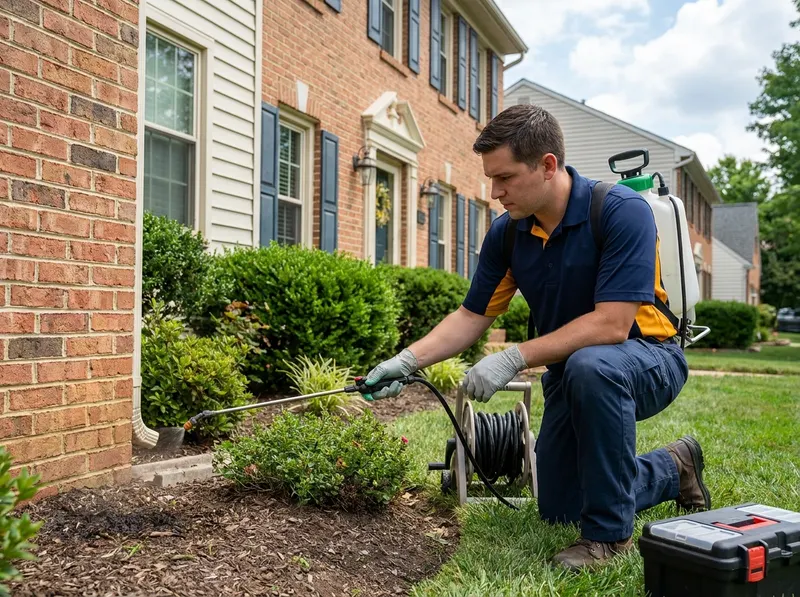
Ant control in Annapolis targets odorous house ants, pavement ants and acrobat ants that push indoors after spring rains from April into June. A single targeted treatment runs $250–$375 and includes non-repellent product on interior trails plus an exterior perimeter and foundation-crack application, since spraying a visible trail with a repellent product usually splits the colony instead of ending it. The technician looks for the moisture line, downspout discharge or overgrown foundation planting that is feeding the colony. If ants have returned twice after retail spray, a quarterly plan at $250–$450 per visit is the honest recommendation.
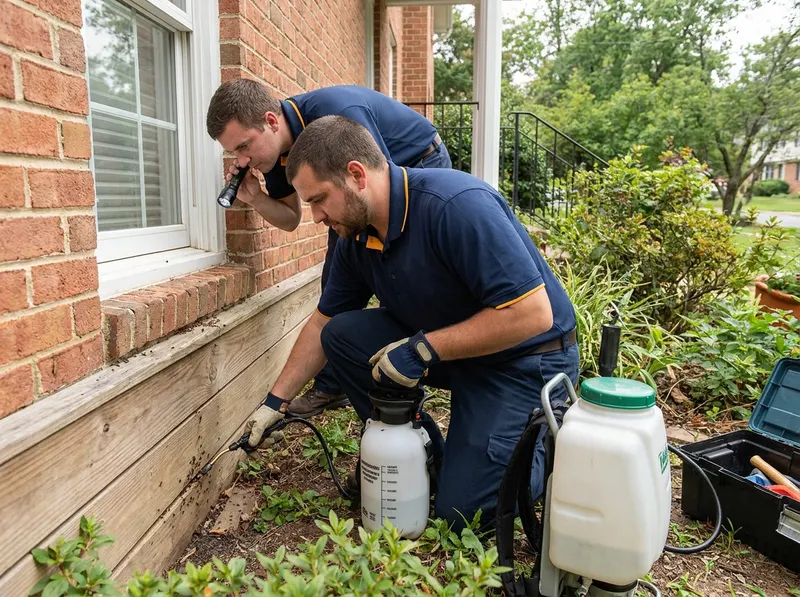
Carpenter ant treatment in Annapolis follows the water, because carpenter ants nest in damp wood rather than eating it. Waterfront and creek-side framing in Eastport, Bywater Estates and Hillsmere Shores gives them what they need: wet sill plates, leaking window headers, porch columns and old deck ledgers. Treatment combines direct nest injection where the galleries can be reached with an exterior perimeter application, and it runs $250–$450 depending on how many satellite nests are found. We identify the moisture source in writing so you know whether a carpentry or gutter repair is part of the real fix.
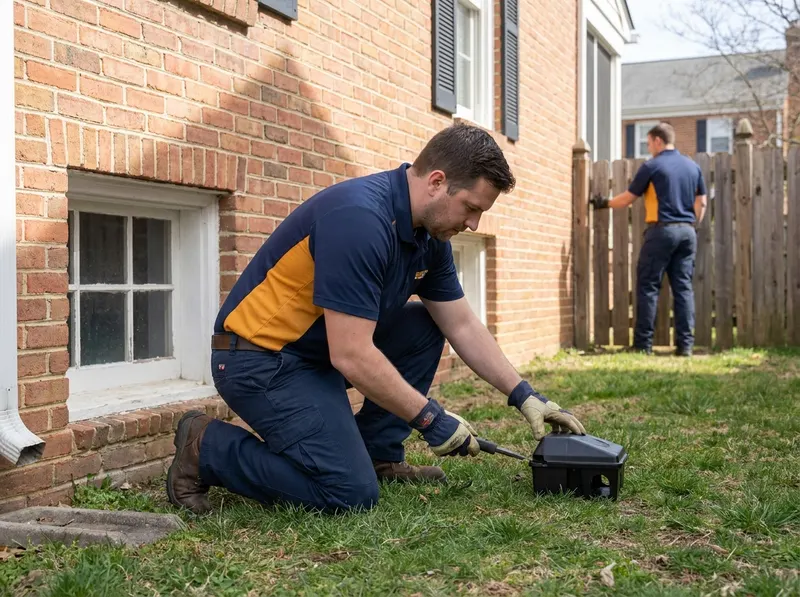
Rodent control in Annapolis means trapping and monitoring for active mice or rats, priced $350–$700 depending on unit count and how many rooms show droppings. Placement follows the evidence — under-sink cabinets, behind appliances, along basement joist runs, in garage corners and attic insulation — rather than scattering traps at random. Activity moves indoors September through November as temperatures drop, which is why late-summer calls are easier to resolve than January ones. Trapping clears the animals present; it does not close the route they used, which is a separate scope.
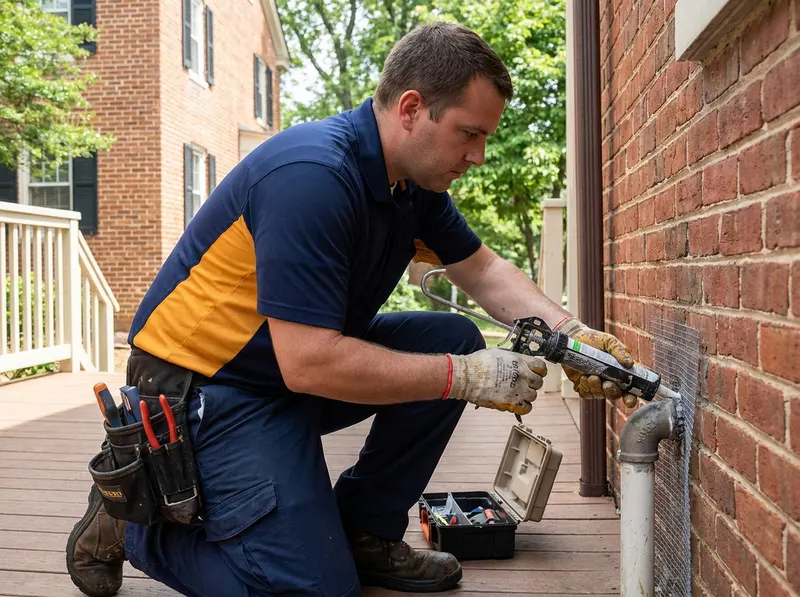
Rodent exclusion in Annapolis seals the physical entry points — sill plate gaps, rubble foundation voids, utility and dryer penetrations, garage door corners, crawlspace vents and roofline soffit gaps — using hardware cloth, copper mesh and sealant rated for gnawing pressure. Older housing stock in Presidents Hill, Murray Hill and West Annapolis frequently has field-stone or rubble foundations with openings a mouse can use without enlarging. Exclusion runs $650–$2,500 based on foundation length, number of openings and how much of the crawlspace is accessible. Boat winterization season at Eastport and Back Creek marinas overlaps October, so schedule sealing in late summer rather than after the first cold snap.
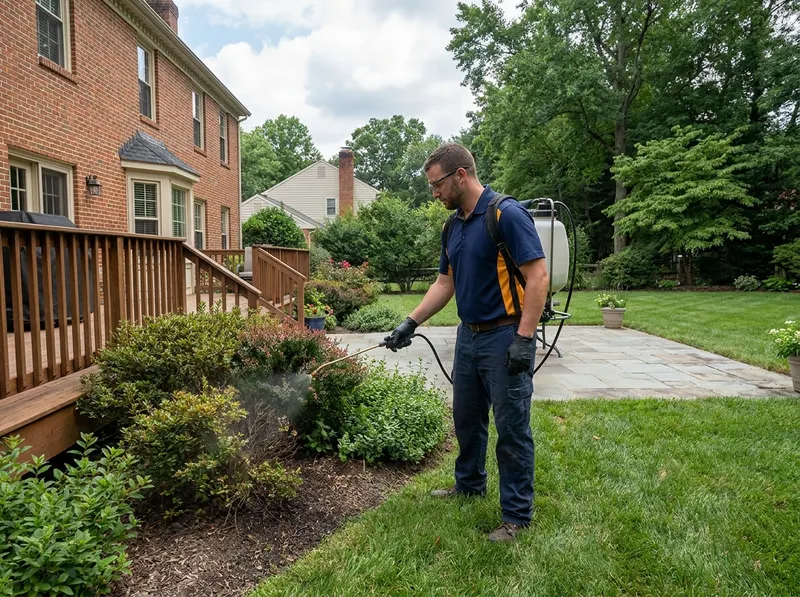
Mosquito control in Annapolis addresses both adult mosquitoes and the standing water breeding them, which in a Chesapeake-humid yard usually means clogged gutters, tarp folds, boat covers, dinghy bilges, planter saucers and low spots that hold water for a week. Mosquito and tick pressure climbs from May and peaks July through early September. A single knockdown treatment before an event runs $250–$450; a season-long program is best scheduled in March or April, ahead of the first treatment window. Treatment focuses on shaded resting harborage — under decks, dense shrub lines, ivy beds — because that is where adults sit between feedings.
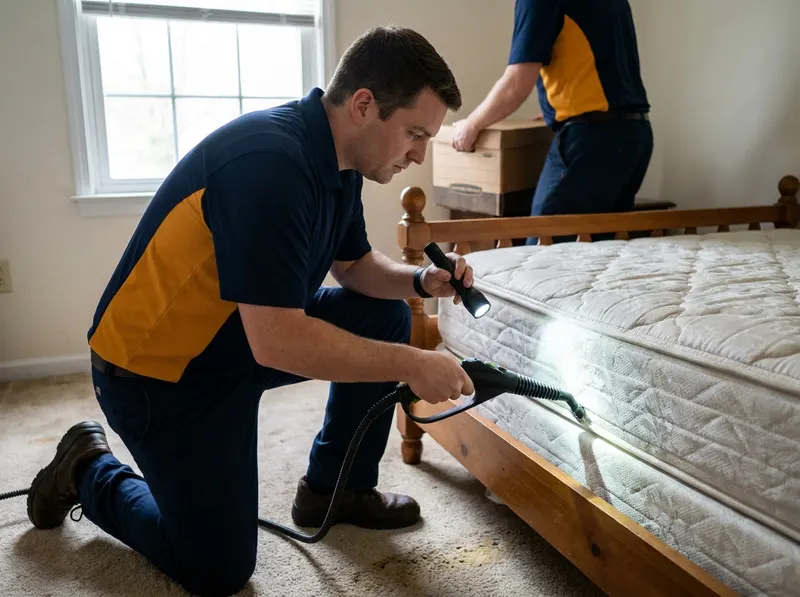
Bed bug treatment in Annapolis is priced per room at $500–$1,500 because scope drives cost more than square footage does. Inspection covers mattress seams and box spring corners, headboard mounts, nightstand joints, baseboard edges and upholstered furniture, and we tell you plainly whether the evidence indicates an active infestation or a single introduced insect. Treatment is a room-by-room protocol with follow-up, and preparation instructions are given in writing before the visit so the first treatment is not wasted. Rentals and short-term stays near downtown are the common introduction route, and catching one bedroom early is a fraction of the cost of a whole floor.
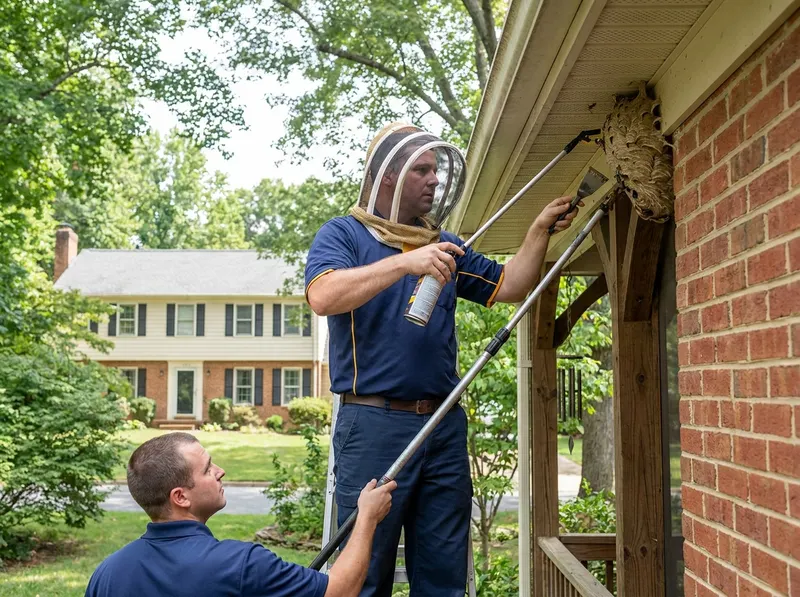
Wasp and yellowjacket nest removal in Annapolis peaks August through September, when colonies are largest and calls cluster around decks, dock framing, soffits, shed eaves and ground nests along fence lines. A single nest treatment runs $250–$375 and includes locating the actual entry — ground nests in particular are often ten feet from where the activity is noticed. Yellowjackets in a soffit or wall void need the void treated, not the visible hole plugged, because sealing a live nest can push foragers into the living space. Urgent stinging-insect calls get priority scheduling.
Stink bug treatment in Annapolis is timed for October, when brown marmorated stink bugs, boxelder bugs and cluster flies gather on sunny south and west walls before working into attics and window frames. The application is an exterior perimeter treatment on siding, window and door surrounds, soffits and vents, and it runs $250–$450 depending on the wall area and building height. Timing matters more than product here: once the insects are inside a wall void, an exterior application no longer reaches them. Sealing attic vents and worn window weatherstripping reduces next year's count more than any repeat spray.
Commercial pest control in Annapolis serves small restaurants, cafés, offices, retail suites and rental buildings on monthly or bi-monthly service at $250–$600 per visit, with a written record of each visit, what was found and what was applied. Food-service kitchens near City Dock and Ego Alley face steady delivery and dumpster pressure through the tourist season, and shared walls in mixed-use buildings make one unit's problem everyone's problem. Service focuses on dry storage, dish areas, floor drains, dock doors and exterior harborage rather than routine baseboard spraying. Scope is written out so a health inspector, a landlord and a manager all read the same document.
Most Annapolis pest problems come down to one honest question: do you want the pest that is in front of you gone, or do you want the conditions that produced it fixed? If you have one nest, one trail of ants along a Murray Hill kitchen baseboard, or a wasp nest under a deck rail, choose a single targeted treatment at $250–$375 — it is the right tool for a contained problem and you are done in one visit. If the same ants or roaches have come back twice after store-bought spray, choose a recurring quarterly plan at $250–$450 per visit instead; the point of a plan is not more product, it is a technician who sees the exterior four times a year and catches the moisture line or slab crack that keeps reseeding the problem. <strong>The trade-off is simple: one-time service is cheaper today, a plan is cheaper over eighteen months on any recurring pest.</strong> With rodents, the split is trapping versus exclusion. If you have one mouse and a clean pantry, trapping at $350–$700 clears it. If you have droppings in two rooms of an older Presidents Hill or Eastport house with a rubble foundation and gaps behind the sill, exclusion at $650–$2,500 is the only work that holds — trapping alone removes the mice you have, not the route the next ones use. The trade-off is cost and a day of sealing labor versus repeating the same trap-out next fall. For termites, an inspection at $250–$375 is the decision-making step, not the fix: if the inspection finds no active mud tubes, you have a baseline and a date to check again; if it finds activity in the framing, a liquid soil barrier at $1,200–$3,000 treats the whole structure while spot treatment only addresses the section we can reach. If you are selling a house in West Annapolis or Wardour and settlement is thirty days out, book the inspection first and ask what report format your lender or title company requires before you schedule any treatment. Mosquito work has its own timing logic: a single knockdown treatment at $250–$450 fits a graduation party or a Fourth of July cookout, while a season-long program starting in March or April fits a family that actually uses the yard from May through September. <strong>The trade-off is one afternoon of relief versus a whole summer of it.</strong> For bed bugs, a room-by-room treatment at $500–$1,500 per room is the standard because scope drives cost more than square footage does — a single bedroom caught early is a fraction of a whole-floor job. If the problem is inside the structure and you want the fastest resolution, choose an interior-focused visit with cabinets emptied and access cleared before arrival; if the problem is pressure coming from outside — ants after April rain, stink bugs on an October wall, yellowjackets in an August soffit — choose exterior perimeter work, because treating indoors for an outdoor-driven pest wastes a visit. Small restaurants, offices and rental units near City Dock and along West Street generally need monthly or bi-monthly commercial service at $250–$600 per visit with documented visit records; a homeowner almost never does. Landlords with a single unit turning over usually do better with a one-time clearance inspection and treatment than with a contract. Ask what re-service between scheduled visits looks like, in writing, before you sign anything — plan language is where the pest industry hides its vagueness, and you should not have to guess.
| Service call | Upfront quote |
Your exact price is confirmed before any work begins.